

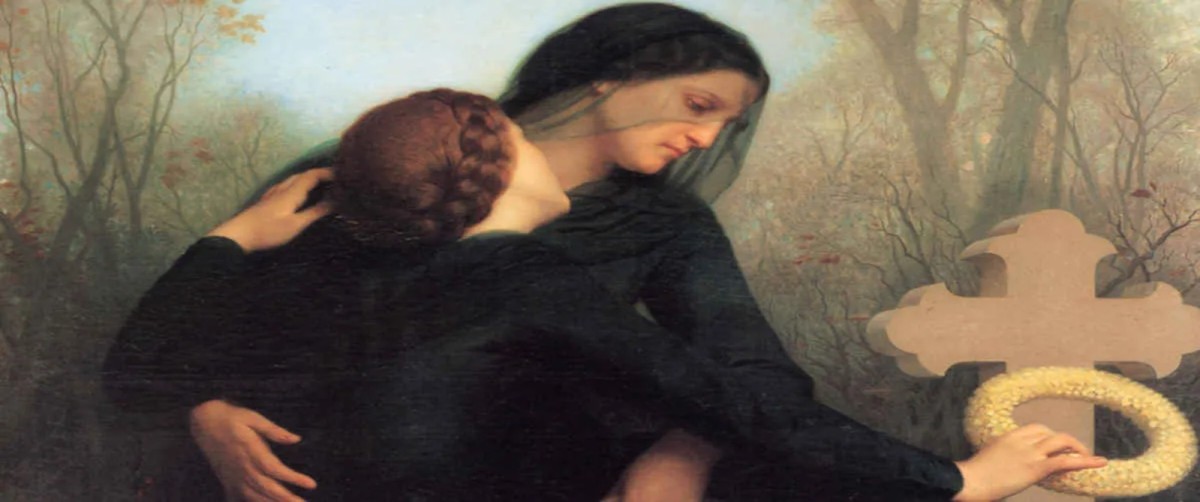
“But we would not have you ignorant, brethren, concerning those who are asleep, that you may not grieve as others do who have no hope. For since we believe that Jesus died and rose again, even so, through Jesus, God will bring with him those who have fallen asleep,”(1 Thess 4:13-14)
On All Souls’ Day, we turn our eyes from those who are in heaven to those who have gone before us in death before being purified of every venial sin and all of sin’s effects. The Catechism of the Catholic Church explains it this way: “All who die in God’s grace and friendship, but still imperfectly purified, are indeed assured of their eternal salvation; but after death they undergo purification, so as to achieve the holiness necessary to enter the joy of heaven. The Church gives the name Purgatory to this final purification of the elect, which is entirely different from the punishment of the damned.” (#1030–31).
All Souls’ Day first calls us to pray for those who have died and are being purified in preparation for their entrance into the Beatific Vision. By praying for those in Purgatory, we are assured that God lavishes upon them all that they need for their souls’ purification. The Mass, and our participation in it, is the ideal way to open the floodgates of mercy for our loved ones who have died and remain unperfected. Our well-intentioned, but erroneous, Western belief that good people go to heaven immediately after death, or become angels, leaves many souls unprayed for. Those souls depend on our prayers because God wants us to pray for them and lovingly share in their purification.
All Souls’ Day’s second focus is upon our own souls. The commemoration reminds us of the importance of our ongoing conversion. We are called to be saints. Becoming a saint requires everything from us. It means that we diligently seek out and annihilate every sinful attachment within our souls. We seek God’s mercy, confess our sins, receive forgiveness, and change our lives.
To understand Purgatory, we can study the teachings of Saints John of the Cross and Teresa of Ávila. These two Doctors of the Church wrote extensively about the process a soul goes through on its way to divine union with God. Saint Teresa describes a series of seven interior dwelling places through which a person must travel, each one requiring a deeper level of purification, culminating with the soul entering the innermost dwelling place, where divine union takes place and the soul is fully purified. Only souls who die in the state of divine union will avoid Purgatory’s purification.
Saint John of the Cross wrote of the same process, using different terminology. He described two purifications a soul goes through on the journey toward perfection. The first is the dark night of the senses, by which every bodily sense and appetite is purified. The second is the dark night of the spirit, by which the intellect, memory, and will are fully purified by an infusion of faith, hope, and charity. The soul then enters mystical marriage, the same as Saint Teresa’s seventh dwelling place.
The reason for this very broad overview is to emphasize that perfection is a long and difficult process, but a necessary one that must take place either in this life or in the next. Personal sanctity must become our first, and exclusive, mission in life. When personal sanctity is our exclusive mission, every other part of our lives falls into place. Virtues grow, love for family and friends increases, duties are perfectly fulfilled, and God is fully glorified.
Most Holy Trinity, through the intercession of the Blessed Virgin Mary, all the angels and saints, I beg for an outpouring of Your Divine Mercy upon every poor soul in Purgatory. Cleanse them all, especially my family and friends who have died, and bring them into the full beauty and splendor of Your presence. Please pour Your mercy down upon my poor soul. Free me from every sin and every attachment to sin. Increase my virtue, and draw me into union with You, my God. Angels and saints of God, pray for us. Jesus, I trust in You.